


Endoscopic Lumbar Fusion
This procedure
uses endoscopic equipment to remove the damaged disc and insert an artificial bone cage
, stabilizing the spine through minimally invasive fusion surgery.

When Is Spinal Fusion Absolutely Necessary?
The necessity is determined by a specialist
based on the patient's age,
symptom severity, disc location, and spinal conditions such as instability or stenosis.
symptom severity, disc location, and spinal conditions such as instability or stenosis.
-

- Severe radiating leg pain due to lumbar disc herniation
-

- Gait disturbances or neurological symptoms due to spinal stenosis
-

- Vertebral slippage or instability from spondylolisthesis
-

- Recurrent pain after previous back surgery
-

- Chronic lower back pain unresponsive to non-surgical treatments
Surgical Procedure
-

- Minimal skin incision of about 1–2 cm
-

- Endoscope with camera and surgical tools is inserted
-

- Protruding disc and surrounding lesions are removed
-

- Compressed nerves are decompressed
-

- An artificial bone cage is inserted into the disc space, and screws are fixed into both vertebrae to stabilize the spine
Features of Endoscopic Lumbar Fusion
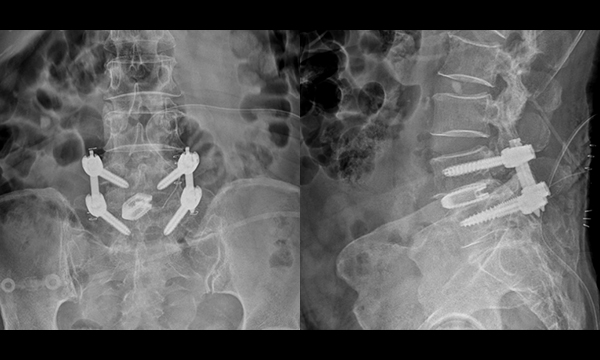
- Minimally invasive surgery that accesses the lesion through an endoscope without large skin incisions
- Less damage and bleeding to muscles and surrounding tissues, allowing for a faster return to daily life
- Reduced overall physical burden makes it suitable for elderly or patients with chronic illnesses
- Allows for simultaneous decompression and fusion
| Category | Endoscopic Lumbar Fusion | Conventional Fusion Surgery |
|---|---|---|
| Incision | 2~3cm | 20cm or more |
| Tissue Damage | Minimal muscle damage with micro-incision | Large skin incision causes muscle damage |
| Infection Risk | Low | High |
| Pain | Low pain due to minimal incision | Severe pain, often requires medication |