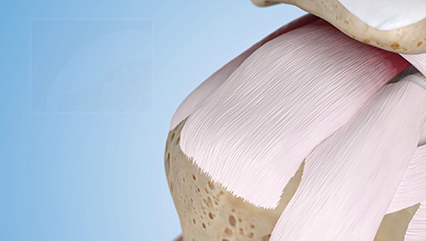
The rotator cuff is a structure composed of four muscles and tendons that surround the shoulder joint.
It plays a crucial role in maintaining shoulder movement and stability.
Tears are categorized by size into small, medium, large, and massive tears, and the tear may increase over time.
Tear Size Classification
Small Tear
Tear size 1cm or less
Medium Tear
Tear size 1~3cm
Large Tear
Tear size 3~5cm
Massive Tear
Tear size 5cm or more
Even in massive tears, if some tendon tissue remains, repair may still be possible. However, if the tendon tissue is completely lost, repair is not feasible.
Without repair, the condition may worsen into arthritis or shoulder paralysis.
Causes of Rotator Cuff Tear
Traumatic
Caused by shoulder impact, excessive exercise, or overuse of the shoulder
Degenerative
Tearing due to weakened tendons from aging and reduced blood flow
Symptoms of Rotator Cuff Tear
Difficulty lifting the arm or reaching backward due to shoulder pain
Worsening pain when lying on the affected shoulder during sleep
Clicking or subtle noises when rotating the shoulder
Less pain during the day, but severe pain at night while sleeping
Diagnosis of Rotator Cuff Tear
After assessing shoulder range of motion, muscle strength, and pain location, imaging tests are conducted.
X-ray
Checks for bone abnormalities or bone spurs
Ultrasound
Enables real-time dynamic imaging of various conditions; diagnostic accuracy depends heavily on the physician's skill and experience
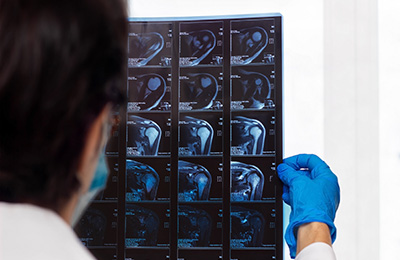
MRI(Magnetic Resonance Imaging)
Visualizes soft tissues (muscles, ligaments, tendons) and bones with high accuracy to objectively evaluate the extent of rotator cuff damage
Treatment for Rotator Cuff Tear
NON-SURGICAL
Recommended first for mild tears, focusing on physical therapy and conservative care.
Rest Avoid excessive shoulder use and get sufficient rest.
Physical Therapy Exercises to restore shoulder strength and flexibility.
Medication Anti-inflammatory pain relievers to manage inflammation and pain.
Injection Therapy Improves joint elasticity and capsule viscosity, reduces friction, and alleviates pain while enhancing joint function.
SURGICAL
Surgery is advised for severe or full-thickness tears. If the tendon cannot be repaired due to a massive tear or the condition has progressed to arthritis, joint replacement may be necessary.
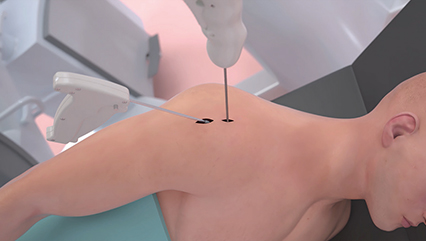
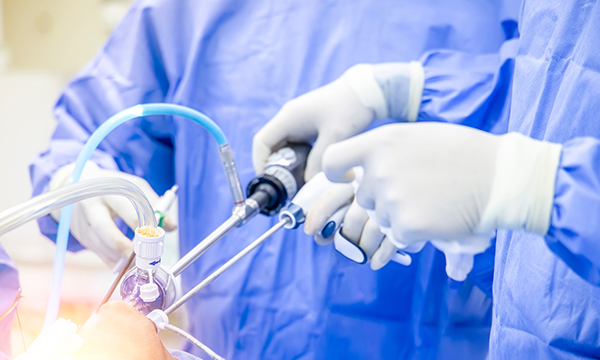
A small incision is made to insert an arthroscope and observe the inside of the shoulder.
A small incision is made to insert an arthroscope and observe the inside of the shoulder.
Sutures are threaded through the torn tendon and tied to reattach it.
회전근개봉합술
Insert a suture-loaded screw into the bone
Anchor the screw to the bone and attach the tendon using the suture
As healing progresses, the tendon and bone bond together via the repaired tissue
Wear a brace for 5–6 weeks to protect the repaired site
At around 12 weeks, the tendon and bone typically regain stable strength
Bioinductive Collagen Implant
Using arthroscopy, a bioinductive implant is attached above the rotator cuff
The implant is fixed to the rotator cuff and bone surface using a special device
Within 6 months, the implant promotes rotator cuff tissue growth in the joint capsule
Benefits of Bioinductive Collagen Implant Treatment
Stimulates rotator cuff regeneration
Shortens recovery time
Reduces risk of re-tear
Maintains postoperative stability
Reduces pain during recovery
Low risk of complications
Patch Repair Technique
Used when the tendon cannot be fully repaired or is too weak.
An allograft patch is applied over the area to prevent re-tearing.
Precautions
Although rare, bleeding, infection, or blood clots may occur during surgery or procedures.